
"What do the different colors on a blade fuse mean?"
If you're looking at a fuse box and feel overwhelmed by the variety of colors, you're encountering a critical, standardized safety system. You're asking a vital question, as understanding this is key to a safe repair. Each color on a blade fuse directly corresponds to its specific amperage rating. For example, in the common ATO and Mini fuse series, blue is always 15 amps, yellow is 20 amps, and red is 10 amps. This international color-coding system was designed to prevent the dangerous mistake of installing a fuse with the wrong rating. The problem is that very cheap, uncertified fuses may use inconsistent coloring or have an inaccurate rating despite the color. The solution is to trust a manufacturer that adheres strictly to these global standards. At GFEFUSE, every blade fuse we produce has a vibrant, accurate color that precisely matches its meticulously calibrated amperage rating, ensuring you can identify and replace fuses quickly, easily, and above all, safely.
"What is a 'low-profile mini' blade fuse and do I need one?"
If you're working on a very new vehicle, you may have opened the fuse box and discovered a blade fuse that looks even smaller than the common "mini" size. This is a low-profile mini fuse. The problem it solves is the constant demand for space savings in modern automotive design. As more and more electronic modules are packed into vehicles, the physical space for components like fuse boxes shrinks. The solution was to create a fuse with the same amperage ratings and color-coding as the standard mini fuse, but in a more compact, shorter package. While they are electrically similar, they are not physically interchangeable. If your vehicle uses them, you must replace them with the same type. GFEFUSE stays at the forefront of automotive trends, and we manufacture a full range of high-quality low-profile mini blade fuse options, ensuring you have access to reliable protection for even the most modern and compact vehicle systems.
"My new replacement fuse blew instantly. Is the fuse bad?"
This is a common and often confusing situation. You've identified a blown blade fuse, replaced it, and the new one blew the moment you turned the key. Your immediate thought might be that the new fuse was defective, but this is extremely unlikely if you're using a quality product. The problem isn't the fuse; the problem is a "hard short" in the circuit. This means there is a direct, persistent path from the power wire to the ground somewhere in the system. The new blade fuse is doing its job perfectly by immediately detecting this dangerous condition and sacrificing itself to prevent a fire. The solution is not to try another fuse. Instead, the circuit itself needs to be professionally diagnosed to find and repair the underlying short. A fast-acting blade fuse from GFEFUSE provides this critical, instant feedback, protecting your vehicle from further damage while signaling that a more serious electrical issue needs your attention.
"My car radio/lights/windows suddenly stopped working. What's the problem?"
When a specific electrical component in your vehicle suddenly fails, the most common and likely culprit is a blown fuse. This is the first place any mechanic or knowledgeable owner will look. The problem isn't the component itself, but the small protective device designed to safeguard it. This happens because of a momentary power surge or a short circuit, and the fuse did exactly what it was designed to do: it sacrificed itself to prevent costly damage to the more expensive electronic part. The solution is to locate your vehicle's fuse box (often under the dashboard or in the engine bay), identify the fuse corresponding to the failed component using the diagram, and replace it. For this, you need a reliable, accurately rated blade fuse. GFEFUSE manufactures a complete range of color-coded fuses, making it simple to find the exact replacement. Using a high-quality GFEFUSE blade fuse ensures the circuit is properly protected once again, restoring function and giving you peace of mind.
Related Products
More items about blade fuse

We Have The Best Solutions for Your Business
Founded in 2013 in Dongguan, Guangdong, our company is a professional manufacturer ofelectronic protection devices. For years, we have been focusing on the protection device field, withan integrated team for development, production and sales, committed to providing customers withproducts of perfect performance and reliability.
Dur moin products include, fuses, fuse ho ders, fuse boxes, outomotive fuses, gutomotive fuse holders, Dcfuses, high-voltage fuses, new energy fuses ond other peripherol occessories, These products ore widelyused in multiple fields such os consumer electronics, outomotive electronics, power equipment,communicotion systems ond new energy. Aiming ot stoble performonce ond reliobility, our products hove notonly guickly won recognition in the domestic morket but olso been exported overseos, enjoying wide morketpopulority.
As 0 competitive compony in the protection device industry, we hove been committed to technologicol R&Dinvestment, quipped with 0 professionol R&D teom, we continuously promote product innovotion to ensureour wide product coveroge ond occelerote morket opplicotion speed of our products.
We olways toke quolity os our core goal and strive to be customer-oriented. Our products hove obtoined UL
cULus, Tuv, CE, COC ond other product certificotions, ond ore in complionce with ROHS ond REACH directives.
User Reviews
What users say about GFEFUSE
Frequently Asked Question
Do you have any question?
GFEFUSE is a trusted manufacturer because of our unwavering commitment to quality and precision. Every blade fuse we produce is made from high-grade materials and rigorously tested to ensure it blows at the exact specified amperage. With global certifications and over a decade of expertise, we provide a blade fuse you can depend on for ultimate safety and reliability.
It is highly unsafe. Cheap, unbranded blade fuse products often use low-quality metals with inaccurate melting points. This means they might not blow when they should, creating a significant fire risk, or they might blow unnecessarily. Always use a certified blade fuse from a trusted manufacturer to ensure proper protection.
You can tell if a blade fuse is blown in two main ways. First, the component it protects will stop working. Second, upon visual inspection, you will see that the metal strip inside the plastic housing is broken or melted. Sometimes the plastic may also appear burnt or discolored if the overload was severe.
The color of a blade fuse is a standardized code that instantly identifies its amperage rating, making replacement simple and safe. For example, a 10-amp fuse is red, a 15-amp is blue, and a 20-amp is yellow. It is critical to always replace a blown fuse with a new blade fuse of the same color and amperage rating.
The main types of blade fuse are differentiated by their physical size and amperage capacity. ATO (or regular) fuses are the standard size. Mini (APM/ATM) fuses are smaller, used in modern vehicles where space is tight. Low-Profile Mini fuses are even more compact. Maxi (APX) fuses are the largest and are used for high-current applications like alternators or main power feeds.
A blade fuse is a fast-acting, replaceable safety device used in vehicle electrical systems. It contains a thin metal strip (the fuse element) designed to melt and break a circuit—or "blow"—if the current exceeds a safe level. This sacrificial action protects the wiring and electronic components on that circuit from damage caused by overloads or short circuits.
Our updates and blog posts
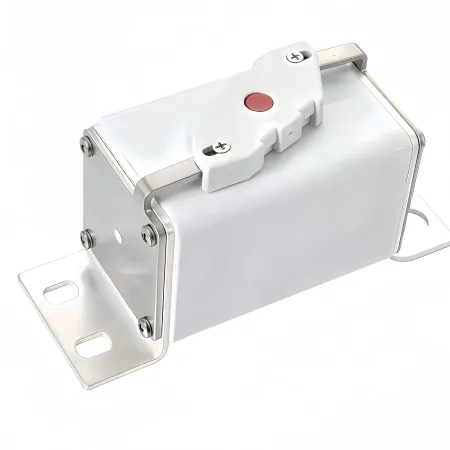
Square high speed fuse: The Ultimate 1500 V DC Guardian for Energy Storage & EV Systems
Discover how the Square high speed fuse from GFEFUSE delivers 1500 V DC, 100 kA protection for BESS, EV chargers and wind converters. UL & IEC approved, low I²t design.
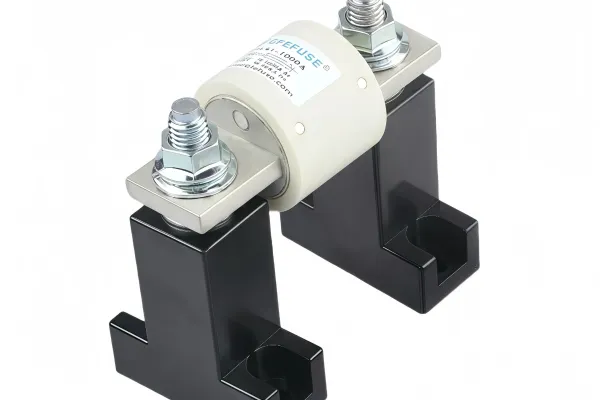
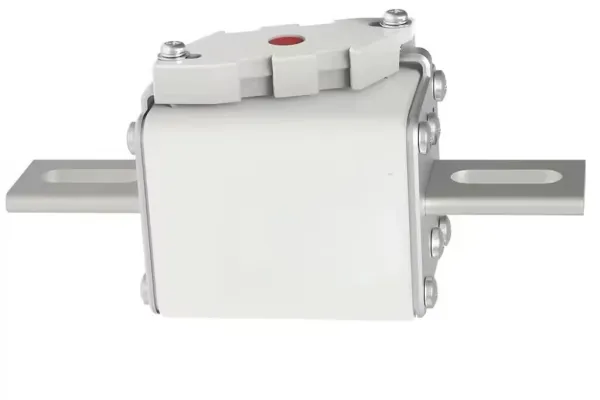
North Americansemiconductor fuse: The 1000 V DC Fast-Acting Shield EV & BESS Engineers Trust
Discover GFEFUSE North Americansemiconductor fuse—1000 V DC, 50 kA, UL & IEC approved. Ideal for EV chargers, BESS, PV inverters. Low I²t, high cycling life.
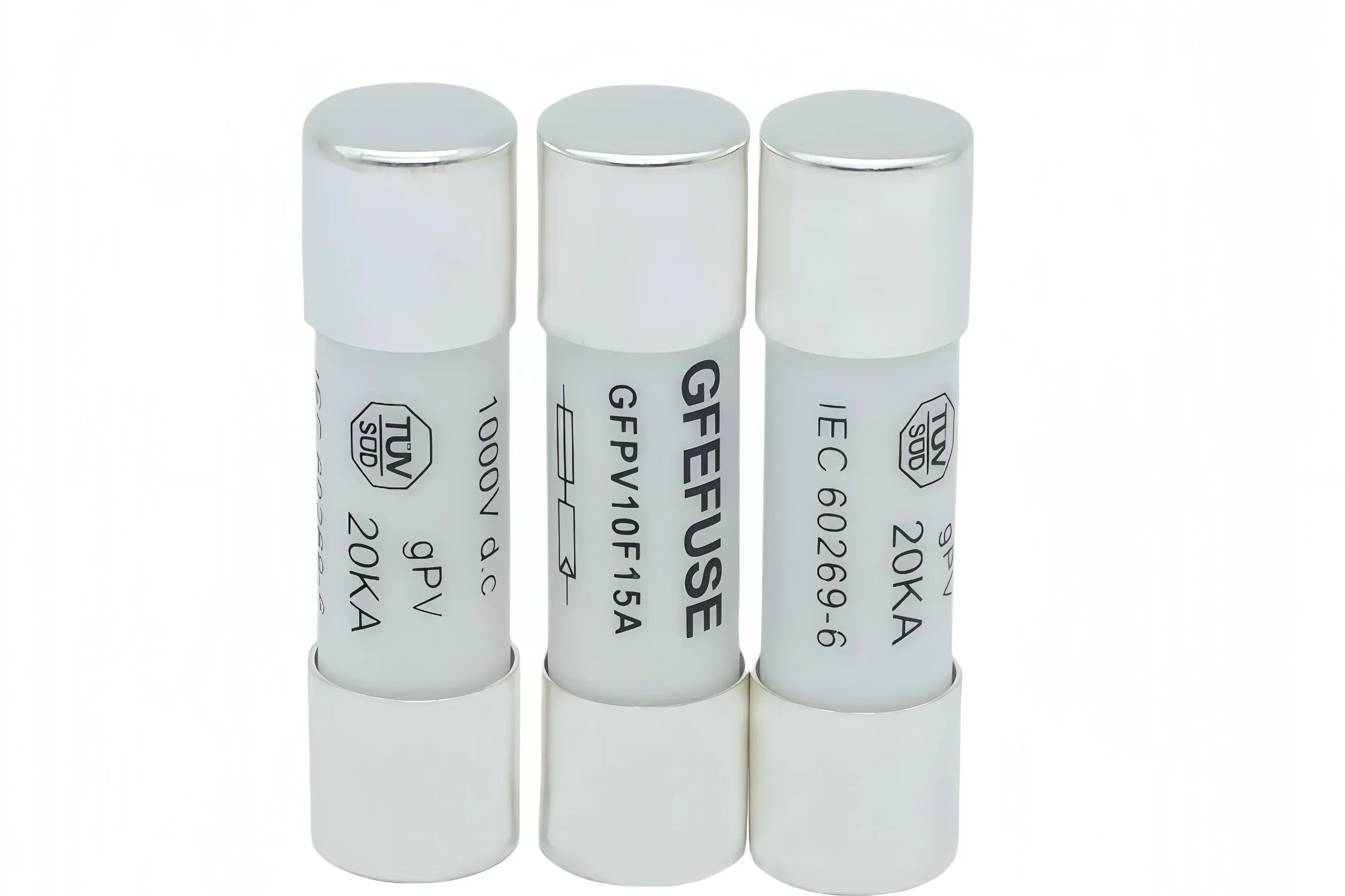
Photovoltaic fuse: The 1500 V DC Guardian Every Solar Array Needs
Discover GFEFUSE Photovoltaic fuse—1500 V DC, 1–30 A, 50 kA, UL-248-19 & IEC 60269-1/6 approved. Ideal for string and combiner boxes. Low I²t, high cycling life.