
A comprehensive guide to ensuring reliability and protection in modern Battery Energy Storage Systems (BESS) through advanced fuse technology.
The Critical Importance of Fuse Selection in Energy Storage
As the global transition to renewable energy accelerates, Battery Energy Storage Systems (BESS) have become the backbone of grid stability and industrial power management. However, the high energy density of lithium-ion battery stacks presents significant safety risks. A single short-circuit event can lead to catastrophic thermal runaway if not interrupted within milliseconds. This is where energy storage fuse safety design plays a pivotal role. Unlike traditional AC distribution, DC energy storage circuits demand specialized protection capable of extinguishing high-energy arcs in high-voltage environments.
Professional engineers must consider more than just current ratings. The integration of a robust energy storage fuse safety design involves a deep understanding of the system's chemistry, the potential peak fault currents, and the specific time-current characteristics required to protect sensitive power electronics. In this guide, we explore the fundamental technical parameters that define a safe and efficient circuit protection strategy for modern energy applications.
Understanding Breaking Capacity and Arc Suppression
In the context of energy storage fuse safety design, the breaking capacity (or interrupting rating) is perhaps the most critical safety metric. Battery racks can deliver massive short-circuit currents, often exceeding scores of kiloamperes (kA). If a fuse is not rated to handle the maximum available fault current, it may physically rupture or fail to clear the arc, leading to fire or explosion.
DC arcs are inherently more difficult to extinguish than AC arcs because they do not have a natural zero-crossing. Therefore, the fuse must be designed with high-quality arc-extinguishing materials, typically high-purity quartz sand. When the fuse element melts, the sand absorbs the energy and forms an insulating "fulgurite" structure. A well-engineered energy storage fuse safety design ensures that the internal pressure of the fuse body is managed effectively, preventing external damage to the cabinet or surrounding components.
Moreover, the voltage rating of the fuse must be selected based on the maximum DC link voltage of the battery system. With many modern utility-scale systems moving toward 1500VDC architectures, the fuse must provide a sufficient safety margin to prevent re-striking of the arc after the element has cleared.
The Impact of the L/R Time Constant
Every DC circuit possesses a certain amount of inductance (L) and resistance (R). The ratio of these two, known as the L/R time constant, determines how quickly the fault current rises and how long the energy persists during a disconnection. For a comprehensive energy storage fuse safety design, engineers must match the fuse's performance to the system's specific time constant.
Standard industrial fuses may be tested at L/R values of 10ms to 15ms. However, in large-scale energy storage plants with long cable runs and complex busbar structures, the time constant may differ. If the system's L/R is higher than the fuse's tested rating, the fuse may take longer to clear the fault, increasing the total energy let-through (I²t). This extra energy can damage MOSFETs, IGBTs, and other semiconductor components within the Power Conversion System (PCS).
Therefore, a high-performance energy storage fuse safety design prioritizes low I²t values. This ensures that the fuse "clears" fast enough to protect the most sensitive parts of the circuit, effectively acting as a high-speed barrier against electrical overstress.
Thermal Management and Environmental Derating
Energy storage systems are often deployed in harsh environments, from scorching deserts to humid coastal regions. Ambient temperature significantly affects fuse performance. As the temperature rises, the melting point of the internal element effectively "drops," which can lead to nuisance tripping if the energy storage fuse safety design does not account for thermal derating.
A professional design incorporates derating factors provided by the manufacturer. For instance, if a fuse is installed in an enclosure where the internal temperature reaches 60 degrees Celsius, its continuous current-carrying capacity might be reduced by 10-20%. Failing to calculate this leads to premature aging of the fuse element, which can eventually cause a system shutdown during peak load periods.
Conversely, in very cold environments, the fuse might take longer to blow than specified in the standard time-current curves. This delay could potentially allow a fault to persist longer than safe limits. A robust energy storage fuse safety design ensures that the selected protection remains within its operational "sweet spot" across the entire expected temperature range of the installation.
Strategic Solutions with GFEFUSE Technology
At GFEFUSE, we specialize in manufacturing high-voltage DC protection components that meet the rigorous demands of global energy transitions. Our approach to energy storage fuse safety design centers on material innovation and precision engineering. We utilize high-strength ceramic bodies and silver-plated copper elements to ensure minimal power loss and maximum reliability.
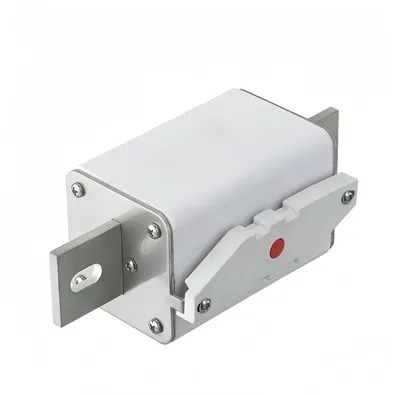
Our product line includes specialized energy storage fuses designed for battery modules, racks, and large-scale containers. For example, the GFBME and GFBFG series are engineered to handle voltages up to 1500VDC and 2000VDC, providing the high-speed interruption necessary to protect modern lithium-ion chemistries.
Why Choose GFEFUSE for Your ESS Projects?
- Optimized Breaking Capacity: Our fuses offer interrupting ratings up to 250kA, ensuring safety even in the most power-dense systems.
- Low Power Dissipation: Efficient energy storage fuse safety design reduces heat generation inside the cabinet, extending the life of nearby electronics.
- Advanced Testing: Each batch of GFEFUSE products undergoes rigorous DC testing to simulate real-world fault conditions.
- Versatile Mounting: From bolt-down fuses to specialized holders, we provide integration flexibility.
Whether you are designing a residential backup system or a utility-scale battery farm, GFEFUSE provides the technical expertise and high-quality components needed to secure your infrastructure. You can explore our full range of high voltage fuses and fuse holders to find the perfect fit for your specific application.
Frequently Asked Questions
Q1: What is the primary goal of energy storage fuse safety design?
The primary goal of energy storage fuse safety design is to provide rapid and reliable interruption of overcurrents and short-circuits in DC systems. This prevents thermal runaway in battery cells, protects expensive power electronics like inverters, and ensures the overall physical integrity of the storage installation by containing electrical arcs safely within the fuse body.
Q2: How does the voltage rating affect energy storage fuse safety design?
The voltage rating is a cornerstone of energy storage fuse safety design because it determines the fuse's ability to "quench" a DC arc. If the system voltage exceeds the fuse rating, the arc may continue to bridge the gap even after the element has melted. Therefore, engineers must select a fuse with a DC voltage rating equal to or greater than the maximum battery string voltage.
Q3: Why is the L/R time constant important in energy storage fuse safety design?
The L/R time constant represents the circuit's inductive nature. In energy storage fuse safety design, matching the fuse's clearing time to the circuit's L/R is essential. A higher L/R means the current takes longer to decay during a fault, putting more stress on the fuse. Fuses designed specifically for ESS are tested at various time constants to ensure they can handle these specific DC characteristics.
Q4: Can standard AC fuses be used in an energy storage fuse safety design?
No, standard AC fuses should never be used in a professional energy storage fuse safety design. AC fuses rely on the current passing through zero 50 or 60 times per second to help extinguish the arc. DC currents are continuous and require specialized internal structures and filler materials to force the arc to stop, making DC-specific fuses a non-negotiable requirement for battery systems.
Q5: How does temperature influence energy storage fuse safety design?
Temperature is a major variable in energy storage fuse safety design. High ambient temperatures cause the fuse element to reach its melting point faster, which reduces its effective current rating. Designers must apply thermal derating factors to ensure the fuse carries the normal load without fatigue while still providing fast protection during an actual fault condition.
Conclusion
Implementing a professional energy storage fuse safety design is the most cost-effective way to protect your BESS investment. By understanding the nuances of DC arcs, time constants, and thermal derating, you can ensure a system that is both safe and efficient.
Ready to enhance your system's safety? Our technical team is here to help you select the ideal components for your project.