
The Strategic Importance of Circuit Protection in PCB Design
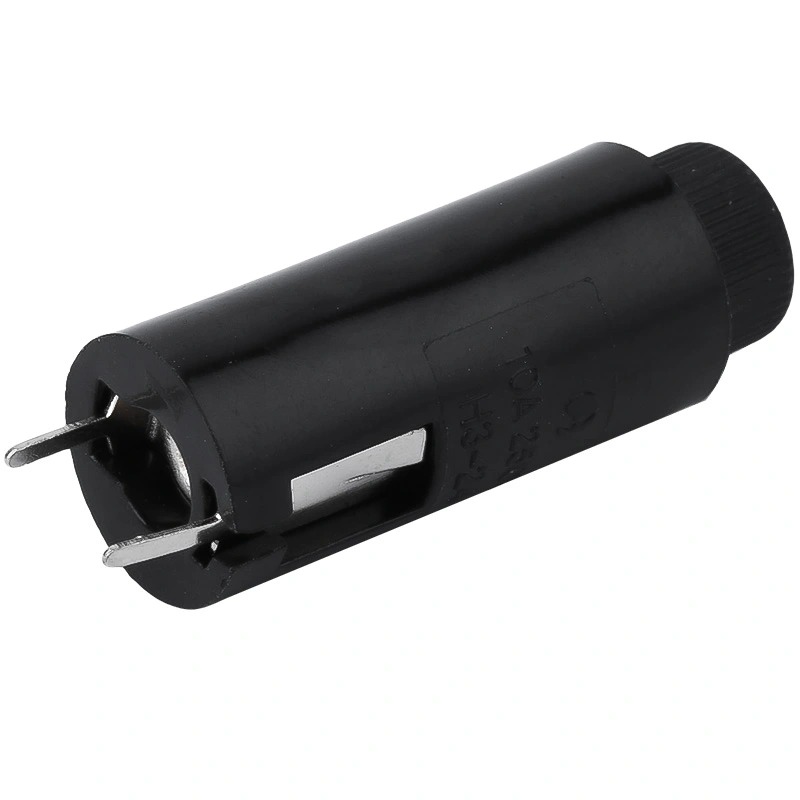
In the complex landscape of modern electronics manufacturing, selecting the right components is not merely a matter of technical compatibility but a cornerstone of long-term product reliability. Among these critical components, the fuse holder serves as a primary line of defense. When engineers seek a professional through hole pcb mount fuse holder supplier, they are essentially looking for a partner that understands the nuances of thermal management, mechanical stability, and electrical integrity. Through-hole technology (THT) continues to be the preferred choice for high-power applications and environments where mechanical stress is a significant factor. Unlike surface-mount counterparts, through-hole fuse holders provide superior physical anchoring to the printed circuit board, ensuring that the connection remains intact even under intense vibration or thermal cycling.
As electronic devices become more compact yet more powerful, the demands on circuit protection hardware have intensified. A dependable supplier must offer solutions that can handle significant current loads without compromising the board space or leading to excessive heat buildup. This guide explores the multi-faceted criteria that procurement professionals and design engineers must use when auditing a potential through hole pcb mount fuse holder supplier. By adhering to a strict checklist, companies can mitigate the risks of field failures, expensive recalls, and safety hazards that arise from substandard circuit protection components.
1. Material Integrity and Thermal Performance
The primary role of a fuse holder is to maintain a secure electrical connection with the fuse while resisting the heat generated during normal operation and fault conditions. When evaluating a through hole pcb mount fuse holder supplier, the first item on your checklist should be the quality of materials used for both the metallic contacts and the insulating body. High-grade brass or copper alloys are standard for contacts, but the plating—typically tin, silver, or gold—is what determines the resistance to oxidation over time. Substandard plating can lead to increased contact resistance, which in turn generates localized heat, potentially damaging the PCB or causing nuisance fuse blows.
Furthermore, the insulating housing must be constructed from flame-retardant materials, typically rated UL94-V0. This ensures that in the event of an extreme overcurrent situation, the holder will not contribute to the spread of fire. A professional through hole pcb mount fuse holder supplier should provide detailed datasheets specifying the Heat Deflection Temperature (HDT) and the Comparative Tracking Index (CTI) of their plastic housings. In industrial and automotive applications, where ambient temperatures can fluctuate wildly, these material properties are non-negotiable. GFEFUSE prioritizes these material standards to ensure that every holder can withstand the rigors of high-temperature soldering and long-term industrial use.
2. Mechanical Precision and Mounting Reliability
Mechanical dimensions play a vital role in automated PCB assembly. A leading through hole pcb mount fuse holder supplier must guarantee tight tolerances on pin pitch and diameter. If the pins are even slightly misaligned, it can lead to assembly bottlenecks or, worse, stress on the solder joints that may fail later in the product life cycle. The "through-hole" aspect specifically requires pins that are robust enough to withstand insertion forces but ductile enough to form a perfect solder fillet.
Vibration resistance is another critical mechanical factor. In applications like electric vehicles (EVs) or industrial machinery, the fuse holder is subjected to constant mechanical shock. A well-designed holder from a reputable through hole pcb mount fuse holder supplier will feature a secure locking mechanism or high-tension clips that prevent the fuse from vibrating loose. Engineers should look for suppliers that conduct rigorous vibration and shock testing as part of their quality assurance protocol. This mechanical reliability ensures that the electrical path remains unbroken, even in the most demanding physical environments, which is a hallmark of high-quality electronics manufacturing.
3. Verification of Electrical Ratings and Certifications
Electrical safety is a matter of compliance and liability. When you vet a through hole pcb mount fuse holder supplier, you must verify that their products carry the necessary international certifications, such as UL, CSA, TUV, or VDE. These marks indicate that the fuse holders have undergone independent testing for current-carrying capacity, dielectric strength, and insulation resistance. For instance, a holder rated for 15A at 250V must be able to operate continuously at those levels without exceeding safe temperature limits.
It is also essential to consider the "derating" factor. A knowledgeable supplier will provide guidance on how the current rating of the fuse holder changes based on the ambient temperature and the specific fuse type being used. Failure to account for these variables can lead to premature component degradation. Your through hole pcb mount fuse holder supplier should offer a wide range of voltage and current options to match various application needs, from low-power consumer electronics to high-voltage energy storage systems. Transparency in sharing test reports and compliance documentation is a key indicator of a supplier's expertise and commitment to safety.
4. Capability for Customization and Technical Support
Every PCB project has unique constraints, whether it is a restricted vertical clearance or a specific terminal orientation. A superior through hole pcb mount fuse holder supplier goes beyond off-the-shelf products to offer customization services. This could involve modifying the pin lengths, changing the housing material for extreme chemical resistance, or designing a completely bespoke holder for a proprietary fuse size. The ability to provide 3D CAD models and rapid prototyping is essential for modern design cycles, allowing engineers to verify the fit and function before committing to mass production.
Technical support is equally vital. When a design engineer encounters a complex circuit protection challenge, they need more than a catalog; they need expert advice. A reliable through hole pcb mount fuse holder supplier employs application engineers who can help calculate I2t values, suggest the best fuse-and-holder combination for inrush current protection, and provide insights into global safety standards. This collaborative approach significantly reduces the time-to-market and ensures that the final product is both safe and efficient. At GFEFUSE, we pride ourselves on being more than just a manufacturer; we are a technical resource for our clients worldwide.
Why Partner with GFEFUSE?
As a premier through hole pcb mount fuse holder supplier, GFEFUSE has built a reputation for excellence in the circuit protection industry. Our manufacturing facilities are equipped with state-of-the-art precision stamping and injection molding equipment, ensuring that every component meets the highest quality standards. We offer a comprehensive portfolio that includes everything from standard 5x20mm holders to specialized pcb fuse holder clips designed for high-current industrial applications.
Our strengths lie in our rigorous quality control processes and our deep understanding of the electronics ecosystem. We don't just supply parts; we provide solutions. For more technical insights, you can read our introduction to pcb mount fuse holders, which details the various configurations available for modern circuit boards. Whether you are working on a new solar farm installation or a compact consumer device, our team is ready to support you with reliable, certified, and high-performance hardware.
Frequently Asked Questions
Q1: How do I verify the reliability of a through hole pcb mount fuse holder supplier?
Reliability can be verified through the supplier's certification portfolio (ISO 9001, IATF 16949) and their ability to provide long-term reliability test data, including salt spray tests, thermal cycling, and vibration resistance reports. A trustworthy supplier will always be transparent with their quality documentation.
Q2: What materials should a through hole pcb mount fuse holder supplier use for high-current applications?
For high-current needs, the supplier should use high-conductivity copper alloys with substantial tin or silver plating to minimize contact resistance. The housing should be a high-temperature thermoplastic that can withstand the heat generated by high-amperage flows without deforming.
Q3: Can a through hole pcb mount fuse holder supplier assist with PCB layout design?
Yes, top-tier suppliers provide detailed 2D drawings and 3D CAD models (STEP files) to help engineers integrate the holder perfectly into their PCB layout. They may also offer advice on trace widths and spacing to handle the intended current load safely.
Q4: Why is the through hole design still popular among through hole pcb mount fuse holder supplier catalogs?
Through-hole mounting offers superior mechanical strength compared to SMT. This is crucial for fuse holders because they must withstand the physical force of fuse insertion and extraction, as well as high-vibration environments found in automotive and industrial settings.
Q5: What is the typical lead time for a professional through hole pcb mount fuse holder supplier?
Lead times vary based on stock levels and customization requirements. However, a reliable supplier like GFEFUSE maintains a robust inventory of standard parts to provide rapid shipping, while custom orders typically take 4-8 weeks depending on the complexity of the design.
Secure Your Circuit Integrity Today
Selecting the right through hole pcb mount fuse holder supplier is a vital decision for your product's safety and longevity. Don't settle for substandard components that put your design at risk.
GFEFUSE - Your Partner in Advanced Circuit Protection Solutions.