
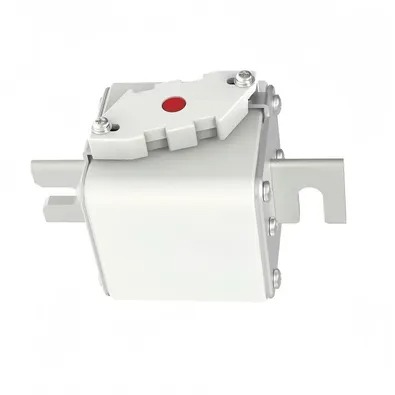
The global shift toward sustainable transportation has accelerated the development of electric vehicles (EVs) at an unprecedented pace. As these vehicles transition to higher voltages and higher power densities, the necessity for robust circuit protection becomes paramount. If you are a procurement manager or an automotive engineer currently searching for a reliable ev fuse for sale, you are likely aware that selecting the right component is not merely a matter of compatibility but a fundamental requirement for system safety. An EV fuse serves as the last line of defense, preventing catastrophic failures, fires, or battery damage during overcurrent events.
At GFEFUSE, we understand that the modern EV architecture demands precision. Unlike traditional internal combustion engine vehicles that rely on low-voltage lead-acid batteries, modern EVs utilize high-voltage lithium-ion battery packs that can exceed 800V. This shift requires specialized high-speed fuses capable of interrupting massive short-circuit currents within milliseconds. Finding a high-quality ev fuse for sale involves evaluating several technical layers, from the materials of the fuse link to the specific magnetic quenching capabilities of the internal filler.
Understanding Technical Specifications of EV Fuses
When evaluating an ev fuse for sale, the first parameter to scrutinize is the rated voltage. Most electric vehicle systems operate within a range of 400V to 1000V DC. It is critical to ensure that the fuse's DC voltage rating matches or exceeds the system's maximum voltage. Using an AC-rated fuse in a DC environment is a common mistake that can lead to explosive failures because DC arcs are much harder to extinguish than AC arcs. The absence of a zero-crossing point in DC current means the fuse must rely entirely on its internal design to stretch and cool the arc.
The second critical factor is the breaking capacity, often referred to as the interrupting rating. High-voltage battery systems can deliver short-circuit currents in the tens of thousands of amperes. A professional ev fuse for sale should have a breaking capacity of at least 20kA to 50kA at its rated voltage. Additionally, engineers must consider the "time-current characteristic" (TCC). This curve defines how long the fuse can withstand a specific current level before blowing. For EV applications, high-speed fuses are generally preferred to protect sensitive power electronics like the Inverter and the Battery Management System (BMS).
Lastly, environmental factors such as temperature derating and vibration resistance play a significant role. Automotive environments are harsh, with temperatures ranging from sub-zero to over 100 degrees Celsius. A reliable ev fuse for sale must be tested for thermal shock and mechanical vibration according to automotive standards like ISO 8820 or JASO. These standards ensure that the fuse will not fatigue over time due to the constant vibrations of the vehicle while in motion.
Safety Standards and Global Compliance
Compliance is the cornerstone of trustworthiness in the automotive supply chain. When you browse for an ev fuse for sale, you must verify if the product carries international certifications such as UL (Underwriters Laboratories), IEC (International Electrotechnical Commission), or RoHS. For the Chinese market, GB/T standards are mandatory. These certifications are not just stamps of approval; they represent rigorous testing cycles that simulate real-world failure modes.
For instance, the UL 248-13 standard covers semiconductor fuses, which are often used in EV power conversion systems due to their fast-acting nature. Meanwhile, the ISO 8820-8 standard specifically addresses high-voltage fuse links in road vehicles. A manufacturer that offers an ev fuse for sale without these certifications poses a significant risk to the OEM's reputation and the consumer's safety. At GFEFUSE, our products are engineered to exceed these international benchmarks, providing peace of mind to our global partners.
Furthermore, the materials used in the construction of the fuse must be high-grade. Ceramic bodies are preferred over plastic for high-voltage applications due to their superior thermal stability and insulation properties. The internal filler, usually high-purity quartz sand, must be precisely controlled for grain size to ensure optimal arc quenching. Any deviation in material quality can result in a fuse that fails to clear a fault, leading to catastrophic system failure.
Primary Application Scenarios for EV Fuses
The placement of a fuse within an electric vehicle is strategic. The most common location is the Battery Disconnect Unit (BDU) or the Power Distribution Unit (PDU). Here, the fuse protects the main battery pack from external short circuits. When sourcing an ev fuse for sale for this application, the current rating must account for the peak acceleration currents and regenerative braking pulses. A fuse that is too "fast" might cause nuisance blowing during normal aggressive driving, while a fuse that is too "slow" might not protect the battery cells effectively.
Another vital application is in the EV Charging Infrastructure. Charging piles (both AC and DC fast chargers) require high-voltage DC fuses to protect the electrical grid and the vehicle's onboard charger. As DC fast chargers push toward 350kW and beyond, the demands on the ev fuse for sale in these stations become extreme. These fuses must handle continuous high loads for long periods without aging prematurely.
Lastly, auxiliary systems such as electric air conditioning compressors, DC-DC converters, and PTC heaters also require individual protection. These systems usually operate at lower currents than the main drivetrain but still at the full battery voltage. Therefore, smaller form-factor high-voltage fuses are required. Finding a specialized ev fuse for sale that fits into compact PCB-mounted holders is often a challenge for designers working on space-constrained vehicle layouts.
Why Choose GFEFUSE for Your Protection Needs
GFEFUSE (Dongguan Gongfu Electronics Co., Ltd.) has established itself as a leading innovator in the circuit protection industry. With over a decade of dedicated research and development, we specialize in high-performance DC protection solutions. Our commitment to quality is reflected in our state-of-the-art manufacturing facility and our rigorous quality control protocols. When you look for an ev fuse for sale through our platform, you are accessing products that have been tested in real-world automotive environments.
Our advantage lies in our vertical integration. We don't just assemble fuses; we design the internal elements to meet specific customer requirements. Our product lineup includes the GFEVT series, which is specifically optimized for electric vehicles and energy storage systems. Whether you need 500VDC or 1500VDC protection, GFEFUSE provides the reliability that modern engineering demands.
In addition to EV fuses, we offer a comprehensive range of energy storage fuses and automotive-fuses designed for high-speed performance. We pride ourselves on our technical support, helping clients calculate the correct derating factors and selecting the ideal fuse-to-holder combination for their specific system architecture.
Conclusion
The complexity of modern electric vehicles necessitates a sophisticated approach to circuit protection. A simple fuse is no longer enough; it must be a precision-engineered safety device. By understanding the nuances of voltage ratings, breaking capacities, and environmental derating, you can ensure your system remains safe under all conditions. When searching for an ev fuse for sale, always prioritize quality and certification over cost, as the implications of a failure are far too high.
Secure Your EV Systems Today
Partner with GFEFUSE for industry-leading circuit protection solutions. Contact our engineering team for a customized quote.
Contact Us NowFrequently Asked Questions
Q1: What is the most important factor when looking for an ev fuse for sale?
The most critical factor is the DC voltage rating. You must ensure the fuse is specifically rated for DC environments and can handle the full system voltage of your battery pack to effectively extinguish arcs during a fault.
Q2: Can I use a standard automotive fuse if I find a cheap ev fuse for sale?
No. Standard automotive fuses are typically designed for 12V or 24V systems. High-voltage EVs require specialized high-speed fuses with higher breaking capacities and ceramic bodies to manage the energy involved in high-voltage short circuits.
Q3: How do I calculate the current rating for an ev fuse for sale?
You should consider the continuous operating current, the ambient temperature, and the transient pulses (acceleration). Typically, a safety margin of 20% to 25% is applied after all derating factors are considered.
Q4: Does GFEFUSE offer international shipping for their ev fuse for sale?
Yes, GFEFUSE provides global logistics support. We work with Tier 1 suppliers and OEMs worldwide, ensuring our high-quality protection solutions are available wherever your manufacturing facilities are located.
Q5: What certifications should I verify for an ev fuse for sale?
You should look for IATF 16949 (automotive quality management), UL 248 series, and IEC 60269 compliance. These ensure the fuse has been manufactured and tested under the highest industry standards.