
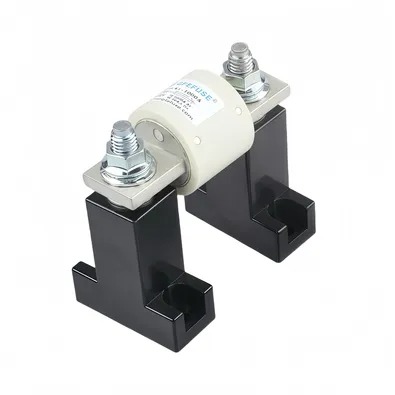
A comprehensive technical exploration into selecting, sourcing, and implementing high-capacity DC protection for modern energy infrastructures.
Understanding the Critical Role of DC Circuit Protection
In the rapidly evolving landscape of industrial power, the transition toward direct current (DC) systems has become a cornerstone of efficiency. Unlike alternating current (AC), DC systems present unique challenges, particularly regarding overcurrent protection and arc quenching. When managing utility-scale projects, the decision to source a bulk dc fuse inventory is not merely a logistical choice but a strategic safety requirement. DC arcs do not have a natural zero-crossing point, which means once an arc is initiated during a fault, it is significantly more difficult to extinguish compared to AC. This physical reality necessitates highly specialized components designed to withstand high-voltage stress while providing rapid response times.
As industries pivot toward renewable energy sources, such as solar photovoltaic (PV) arrays and battery energy storage systems (BESS), the demand for reliable circuit protection has surged. Engineers and procurement officers must prioritize components that can handle the specific thermal and electrical profiles of these environments. Utilizing a high-quality bulk dc fuse solution ensures that every segment of a power plant remains protected against short circuits and ground faults. This protection is vital for preventing catastrophic equipment failure, minimizing downtime, and ensuring the longevity of expensive assets like inverters and battery modules.
GFEFUSE has consistently led the market by providing engineered solutions that address these specific DC-related hazards. By understanding the physics of DC interruption, we provide components that offer superior breaking capacities. Whether you are designing a high-speed transit power system or a massive solar farm, the fundamental principles of DC protection remain the same: reliability, speed, and durability. This guide delves into the technical nuances of selecting the right fuse type and the economic advantages of large-scale procurement.
Essential Technical Parameters for Bulk DC Fuse Selection
When evaluating options for a bulk dc fuse order, technical specifications must align perfectly with the system's operational requirements. The most critical parameter is the Rated Voltage (Un). In DC applications, the fuse must be rated for the maximum open-circuit voltage of the system, often reaching 1000VDC or 1500VDC in modern solar installations. Selecting a fuse with an insufficient voltage rating can lead to the inability to clear a fault, resulting in sustained arcing and fire hazards. Additionally, the Rated Current (In) must be carefully calculated, considering the continuous load and potential ambient temperature fluctuations that can cause thermal derating.
Another pivotal factor is the Interrupting Rating or Breaking Capacity. This represents the maximum fault current the fuse can safely interrupt without rupturing. Industrial environments often face high prospective short-circuit currents, making it essential to choose a bulk dc fuse with a breaking capacity that exceeds the calculated fault levels of the installation site. Time-current characteristics (TCC) are also vital; they define whether a fuse is "fast-acting" for sensitive electronics or "time-delay" for systems with high inrush currents. For example, semiconductor fuses are designed to act within milliseconds to protect power electronics, while gPV fuses are optimized for the specific cycles of solar strings.
Lastly, the L/R time constant of the circuit must be considered. The inductance-to-resistance ratio determines how quickly the fault current rises and how much energy the fuse must dissipate. Fuses tested at higher L/R values offer more robust protection in inductive circuits. At GFEFUSE, we rigorously test our products against international standards such as IEC 60269 and UL 248 to ensure that every bulk dc fuse delivered meets these stringent performance metrics. Understanding these parameters allows engineers to create a coordinated protection scheme where the fuse acts as the reliable last line of defense.
The Strategic Advantages of Bulk DC Fuse Sourcing
Procuring components through a bulk dc fuse strategy offers significant advantages beyond simple cost savings. In large-scale industrial projects, such as the construction of data centers or electric vehicle (EV) charging networks, consistency is paramount. Buying in bulk ensures that all fuses across a project come from the same manufacturing lot, which guarantees uniform performance characteristics. This consistency simplifies maintenance and troubleshooting, as technicians can rely on standardized response times and physical dimensions across the entire infrastructure.
Supply chain resilience is another major benefit. By maintaining an on-site inventory of bulk dc fuse units, companies can mitigate the risks associated with global shipping delays or sudden market shortages. In an era where "just-in-time" manufacturing can be disrupted by geopolitical events, having a secure supply of critical protection components is a competitive advantage. Furthermore, bulk purchasing allows for more streamlined quality inspections. Instead of verifying dozens of small shipments, quality control teams can perform comprehensive batch testing on a larger scale, ensuring that every unit meets the required safety certifications before deployment.
From a financial perspective, the economies of scale associated with a bulk dc fuse agreement are undeniable. Reduced per-unit costs, combined with lower shipping and handling expenses, contribute to a healthier project margin. However, it is essential to partner with a manufacturer like GFEFUSE that maintains high quality-control standards even at high volumes. We pride ourselves on our ability to scale production without compromising the precision engineering required for DC protection. This balance of volume and value makes bulk sourcing a preferred method for Tier 1 contractors and system integrators worldwide.
Industry Applications: Solar, EV, and Beyond
The application of bulk dc fuse technology spans several high-growth sectors. In the solar industry, photovoltaic fuses are used at both the string and array levels to prevent reverse current from damaging panels. These fuses must withstand harsh outdoor environments, including extreme temperature cycles and UV exposure. By utilizing specialized gPV (General Purpose Photovoltaic) fuses in bulk, solar farm developers can ensure that thousands of individual circuits are protected with components specifically tuned for DC solar characteristics, which differ significantly from standard industrial loads.
The electric vehicle revolution has also created a massive demand for high-performance DC protection. Inside an EV, fuses protect the high-voltage battery pack, the onboard charger, and the power distribution unit. Sourcing a bulk dc fuse supply for automotive manufacturing requires compliance with strict IATF 16949 standards. These fuses must be vibration-resistant and capable of handling the high-current surges during rapid acceleration. Similarly, the infrastructure supporting EVs—fast-charging stations—requires robust DC fuses to manage the high power transfer between the grid and the vehicle's battery.
Energy Storage Systems (ESS) represent another critical frontier. These systems often utilize massive banks of lithium-ion batteries that store megawatts of power. A fault in such a system can release immense amounts of energy in microseconds. Implementing a bulk dc fuse strategy within ESS racks provides a reliable failsafe. GFEFUSE products are specifically designed for these high-energy environments, offering fast clearing times that prevent thermal runaway. As global energy grids become more decentralized, the reliance on these specialized DC protection components will only continue to grow across all industrial segments.
GFEFUSE: Excellence in DC Protection Solutions
GFEFUSE is a premier manufacturer specializing in high-performance circuit protection. We understand that in the industrial world, a fuse is more than just a component; it is a guarantee of safety. Our extensive catalog includes specialized photovoltaic fuse designs for solar applications, as well as ultra-reliable ev fuse units for the modern automotive industry. We also provide comprehensive energy storage fuses ess to protect the heart of power backup systems.
Our competitive advantage lies in our state-of-the-art manufacturing facility and rigorous testing protocols. When you order a bulk dc fuse shipment from us, you are receiving products that have undergone thermal cycling, vibration testing, and precise calibration. We also offer high-quality fuse holder options to ensure secure and efficient integration into your panels. At GFEFUSE, we combine technical expertise with a global supply chain to deliver protection solutions that meet the most demanding international standards.
Our commitment to innovation ensures that we are always ahead of the curve, developing fuses for the next generation of 1500VDC systems and beyond. By focusing exclusively on DC and specialized AC protection, GFEFUSE provides the depth of knowledge necessary to help our clients choose the optimal bulk dc fuse for their specific engineering challenges. Our team of experts is available to assist with technical selection, ensuring your projects are both safe and cost-effective.
Frequently Asked Questions about Bulk DC Fuse Solutions
Q1: What are the primary safety considerations when installing a bulk dc fuse?
Safety considerations include ensuring the voltage rating is higher than the system's maximum voltage, verifying the interrupting capacity can handle the highest potential fault current, and using proper mounting hardware to prevent overheating at contact points. Proper insulation and clearance distances must also be maintained in accordance with local electrical codes.
Q2: How does temperature affect the performance of a bulk dc fuse?
DC fuses are thermal devices. High ambient temperatures cause the fuse to melt at a lower current than its nominal rating. Engineers must apply "temperature derating" factors provided by the manufacturer to ensure the bulk dc fuse does not experience nuisance blowing during hot summer months in outdoor installations like solar farms.
Q3: Can I use an AC fuse for a DC application if I buy a bulk dc fuse by mistake?
No, you should never use an AC fuse in a DC circuit unless it is specifically cross-rated by the manufacturer. AC fuses rely on the current passing through zero to extinguish the arc. In a DC system, the arc is continuous and much more energetic. Using an AC-only fuse for DC protection can lead to the fuse exploding or failing to stop the current during a fault.
Q4: What is the shelf life of a bulk dc fuse stored in a warehouse?
When stored in a cool, dry environment, a bulk dc fuse typically has an almost indefinite shelf life. However, metal components like caps and blades can oxidize over many years if exposed to high humidity. It is recommended to keep them in their original GFEFUSE packaging to ensure the contact surfaces remain clean for optimal conductivity.
Q5: How do I verify the certification of a bulk dc fuse shipment?
Reputable manufacturers like GFEFUSE provide certificates of compliance (CoC) and test reports upon request. Look for markings such as UL, CE, TUV, or RoHS on the fuse body. Verifying these certifications ensures that the bulk dc fuse units meet the safety and environmental standards required for your specific industry and region.
Secure Your Power Systems with GFEFUSE
Don't compromise on safety. Whether you need protection for solar arrays, electric vehicles, or energy storage, GFEFUSE provides the engineering excellence you need.